Affiliate Disclosure: This page contains affiliate links to products selected for practical fit. When you purchase through these links, we may earn a commission at no additional cost to you. Recommendations are based on the registry's stated features, price, level, pros, cons, and best-for labels. We do not imply hands-on testing without an explicit page-level record. See our complete Tools Guide for comparison notes and selection criteria.
Choosing your first calligraphy kit can feel overwhelming when faced with dozens of options ranging from $10 to $200. The right starter kit gets you practicing solid technique within hours, while the wrong one leaves you fighting poor-quality nibs and wondering if calligraphy just isn't for you.
This comparison covers common starter-kit formats using the product registry's listed features, price, beginner fit, replacement availability, and upgrade path. Those details help separate a focused first setup from a large bundle that may sit unused after a few frustrating sessions.
This guide breaks down the three main types of starter kits (dip pen, fountain pen, and brush pen), compares the best options in each category, and matches kits to specific learning goals and budgets. Whatever script you're aiming at - traditional Copperplate, looser modern lettering, or just neater envelopes for a DIY wedding - there's a kit that gets you there without paying for tools you won't touch.
Desk-research comparison, not a hands-on test. Prices below are illustrative budget ranges, not verified current offers. Confirm the exact contents, model, and price on the seller's listing before buying.
What should a beginner calligraphy kit include?
A beginner kit only needs a forgiving pen or nib set, smooth practice paper, ink that matches the pen, and clear alphabet or stroke drills. If a kit has those basics, it is enough to start the beginner learning path; extra colors, decorative holders, and specialty nibs can wait.
- Pen: brush pens for modern calligraphy, Pilot Parallel pens for broad-edge scripts, or a simple dip pen set for traditional work.
- Paper: smooth, bleed-resistant sheets plus guide lines from the practice sheet generator.
- Instruction: a workbook or chart that starts with strokes before alphabets, then points you toward the right pen choice for your next script.
Three Types of Calligraphy Starter Kits
Calligraphy kits fall into three distinct categories based on the pen system they teach. Each type excels at different scripts and suits different learning preferences. Understanding these categories before you buy prevents the common mistake of choosing a kit that doesn't match your actual goals.
Dip Pen Kits: Traditional Calligraphy
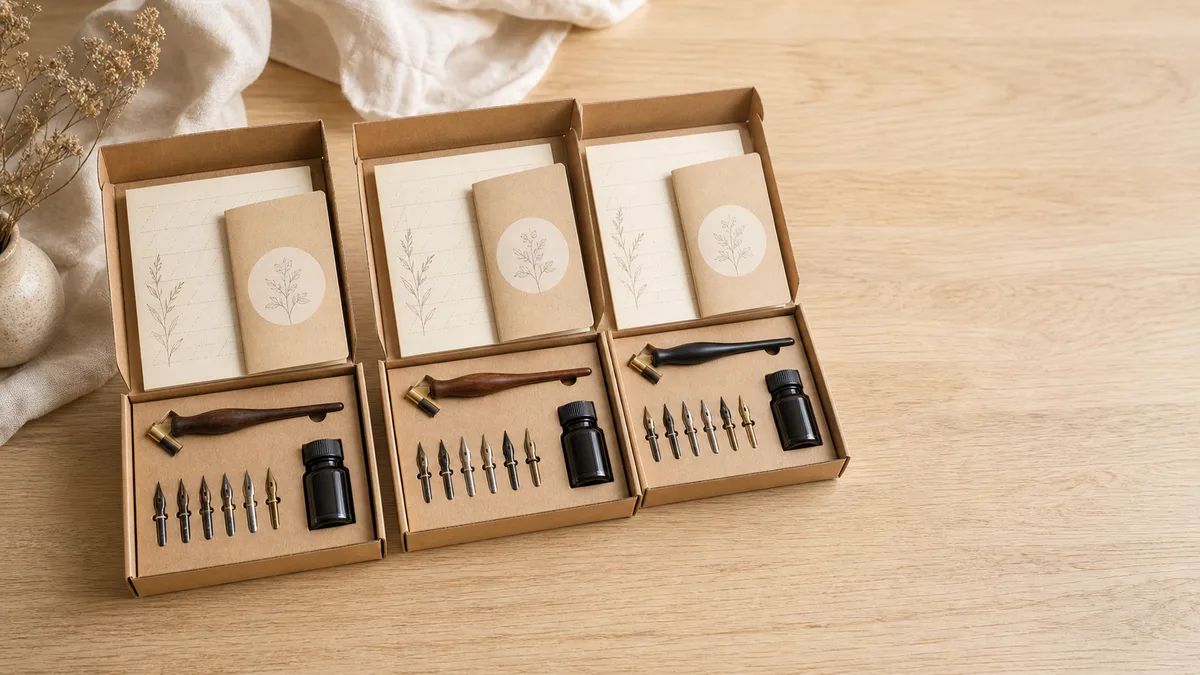
Dip pen kits include removable nibs, holders (straight or oblique), and bottled ink. You repeatedly dip the nib into ink as you write — no built-in reservoir. These kits can be used for historical scripts like Copperplate, Spencerian, and Gothic hands because they deliver the extreme line variation these styles demand.
The Speedball Complete Calligraphy Set linked here is a fountain pen set in our registry, not a pointed dip pen kit. Do not buy it expecting an oblique holder or a Nikko G nib. For Copperplate-style pressure variation, check for a compatible flexible pointed nib, holder, and dip-pen ink.
Fountain Pen Kits: Convenient Learning
Fountain pen kits for calligraphy feature specialized pens with built-in ink reservoirs and wide calligraphy nibs. The Pilot Parallel pen is the gold standard here — it's not quite a traditional fountain pen because it uses parallel plates instead of a conventional nib, creating crisp edges that rival dip pen quality.
A 2-pen Pilot Parallel set with 2.4mm and 3.8mm widths costs $20-25 and gives you instant gratification. Fill the cartridge, uncap the pen, and you're writing Italic letterforms within minutes. No ink mess, no dipping rhythm to master, no wondering if you loaded the nib correctly. For beginners who just want to see if calligraphy clicks before committing to the full dip pen experience, this is perfect.
Brush Pen Kits: Modern Calligraphy Fast Track
Brush pen kits contain flexible brush-tip markers designed for modern calligraphy and hand lettering. The Tombow Fudenosuke 2-pen set (hard and soft tip, $5-8) or a Pentel Fude Touch Sign 4-pen set ($15-18) gets you started immediately. These pens mimic the thick-thin variation of pointed pen calligraphy by flexing under pressure, but there's no ink to mix and no nibs to clean.
I recommend brush pens for anyone interested in casual hand lettering for bullet journals, greeting cards, or social media content. They're also excellent travel tools. But understand their limitations: brush pens don't teach traditional dip pen technique, and after 3-12 months of regular use, the tips wear out and you'll need replacements.
Best Starter Kits by Budget and Goal
Compare the following registry-listed sets by pen system and contents. No classroom outcomes or firsthand product tests are documented here.
Fountain Pen Option: Speedball
The Speedball Calligraphy Set is listed in our registry with two fountain pens, three nib widths (1.1, 1.5, and 1.9mm), cartridges, and an instruction guide. Confirm those contents with the seller. It is not the dip pen bundle previously described here, and India ink should not be put in these fountain pens.
If you want to add pointed-pen practice, build a separate compatible setup around a nib such as the Nikko G for pointed-pen practice. It needs a suitable dip pen holder and ink; it is not a replacement nib unit for the linked fountain pens.
Fountain Pen Option: Manuscript
The Manuscript Deluxe Calligraphy Set is listed with one fountain pen, six nib units, a converter, four color cartridges, and a storage tin with instructions. It is not a twelve-nib dip pen set. Verify the supplied nib widths and compatible inks before choosing it for a particular alphabet.
The extra nib units offer more widths to compare. There is no documented side-by-side writing test here to establish smoother feel, better comfort, or longer life than the Speedball set.
Larger Bundle: Mont Marte
The Mont Marte Calligraphy Set (32-piece) is another set to compare, not a verified premium upgrade. Check the seller's exact contents and pen system; piece counts may include cartridges rather than additional writing tools.
Before buying a larger kit, decide whether you want Copperplate pointed pen work or Italic broad-edge lettering. A large bundle does not establish suitability for both; no balance or comfort test is claimed for this set.
Specialty: Fountain Pen Alternative
For learners who prioritize convenience and immediate results over dipping ink, consider a Pilot Parallel pen set. A 2-pen combo (2.4mm and 3.8mm widths) costs $20-25 and is intended for broad-edge scripts such as Italic, Uncial, and Gothic. It still needs cleaning and compatible ink. Use the beginner guide to choose a script before a pen.
The 2.4mm width is perfect for learning Italic hands at standard x-heights, while the 3.8mm creates bold letterforms for display work and envelope addressing. Once you're comfortable, add the 1.5mm (for small formal text) or 6.0mm (for poster-scale lettering). These pens last longer with appropriate care, but no lifespan or comparison test is documented here.
What to Upgrade First
Starter kits are designed to get you practicing, not to provide your forever toolkit. Replace a component when you can identify what it prevents you from doing, rather than after a prescribed number of hours.
For pointed pen, a different nib may offer a different flex response; check holder fit as well as the intended stroke size. The Brause EF66 and Nikko G are different products, not interchangeable names. For broad-edge work, compare nib widths that match the size of your exemplar.
If you're sticking with pointed pen, the next upgrade is the holder. A quality oblique from Hourglass Pens, Speedball's premium line, or a custom turner may offer a different fit. Check nib seating and comfort; price alone does not establish either, and no wear interval is asserted.
Check paper and ink early if your strokes feather or skip. India ink belongs only in tools whose maker allows it, not ordinary fountain pens. Compare calligraphy inks (sumi, walnut, iron gall) and suitable paper using a small sample before committing to a finished piece.
Common Starter Kit Mistakes to Avoid
Check these common purchase mismatches before choosing a kit.
The first trap is buying the biggest kit available. That 60-piece mega-set for $85 looks impressive on the shelf, but you'll realistically use maybe 15 of those pieces in your first year. Most of the rest is duplicate basic nibs in slightly different sizes, decorative holders you won't prefer, and gimmicky accessories. A focused 12-25 piece kit teaches more, faster - add specialty tools as your style preferences emerge.
The second is choosing cheap "calligraphy sets" built around disposable cartridge pens that look like markers. They produce calligraphy-shaped letters but don't teach real technique - they're pre-angled felt tips, not flexible nibs. You can't adjust pressure, swap nibs, or build the muscle memory that transfers to professional work. Spend the same $15-20 on an authentic dip pen kit or a Pilot Parallel set instead.
Finally, don't ignore the booklet that came in the box. The spiral-bound guides may include alphabet charts and stroke sequences. Check that the examples match your nib and intended script, and use a named instructional source if the supplied booklet is too brief.
Pairing Your Kit with Practice Resources
A starter kit provides the tools, but you need structured practice to build skill efficiently. Pair your new kit with these resources to accelerate progress.
Use our free Practice Sheet Generator to create font-based tracing sheets with horizontal practice lines. It does not offer nib-size, millimetre x-height, or slant-angle controls. Use a separately ruled guide for script-specific proportions.
Follow the 30-Day Calligraphy Challenge Calendar for structured daily practice prompts. Each prompt targets specific techniques (pressure variation, spacing consistency, entry strokes) with clear success criteria. This framework prevents the common beginner trap of practicing the same comfortable letters over and over while avoiding problem areas.
Consult the Common Calligraphy Mistakes guide when you hit plateaus. Most beginners encounter the same 8-10 technical issues (inconsistent slant, uneven baseline, shaky downstrokes), and targeted fixes exist for each. Identifying your specific issue and drilling the correction saves weeks of frustrated practice.
For deeper study of specific scripts, pair your kit with quality instructional materials. The IAMPETH archives offer free downloadable practice sheets and exemplars for historical pointed pen hands. Eleanor Winters' "Mastering Copperplate Calligraphy" ($18-24) remains the Copperplate instruction book; do not treat Copperplate, Spencerian, and Engrosser's Script as interchangeable labels. For modern calligraphy with brush pens, Molly Suber Thorpe's "Modern Calligraphy" ($14-20) provides excellent progressive lessons.
Recommended Products
These starter kits are grouped by budget, learning goal, and long-term value. The comparison does not claim firsthand testing or guaranteed learning outcomes; use the criteria above to choose a setup you can practice with consistently.
Best Calligraphy Starter Kits
All-in-one kits that take a beginner from zero to first finished piece
Speedball Calligraphy Set
Professional-quality calligraphy fountain pen set featuring 2 pens with comfort grips, 3 precision steel nibs (1.1mm, 1.…
Manuscript Deluxe Calligraphy Set
Classic calligraphy set including one deluxe fountain pen, 6 nibs (fine, medium, broad, 2B, 3B, and 4B), converter, 4 co…
Speedball 3062 Complete Calligraphy Kit
Complete calligraphy starter kit with pens, nibs, and ink cartridges. Speedball 3062 Complete Calligraphy Kit.…
Mont Marte Calligraphy Set 32 Piece
Complete calligraphy starter kit with pens, nibs, and ink cartridges. Mont Marte Calligraphy Set 32 Piece.…
Wordsworth and Black Calligraphy Pen Set
Complete calligraphy starter kit with pens, nibs, and ink cartridges. Wordsworth and Black Calligraphy Pen Set.…
We may earn a commission when you buy through these links. See all recommendations →
Selection notes are based on the product registry's stated specifications and intended use. No firsthand product-testing record is asserted on this page.