
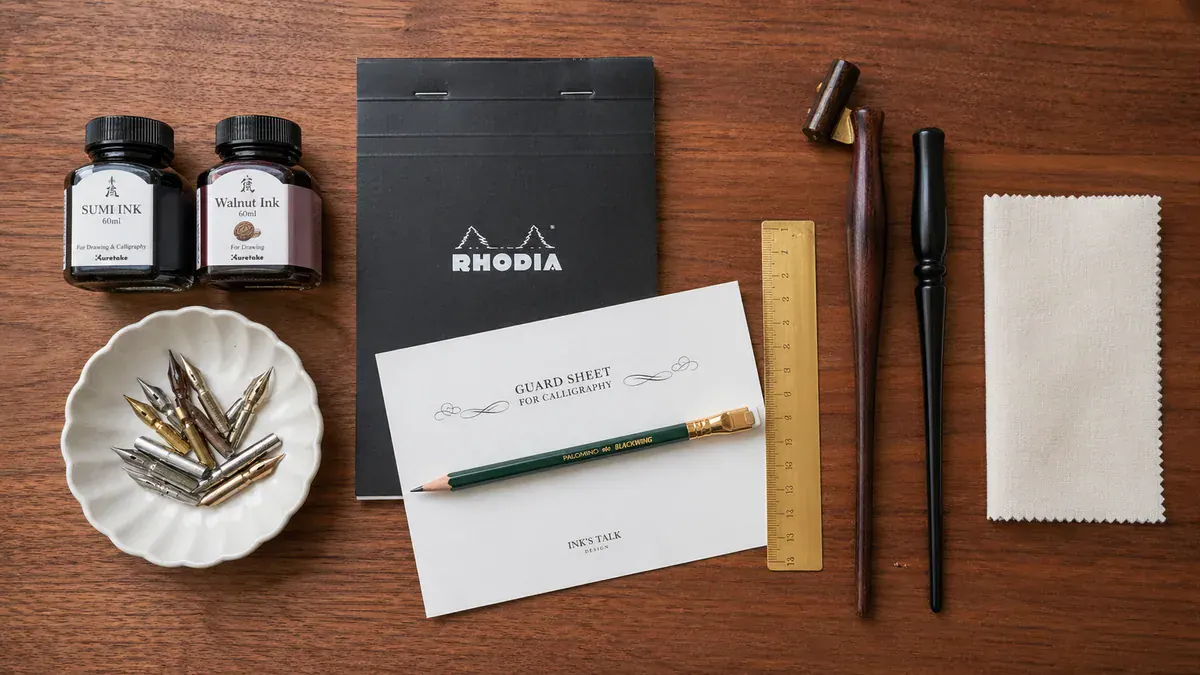
Useful gifts for calligraphers fit the script they write and the tools they already use. Ask for one exact refill or one missing convenience before choosing a large assortment. A modest, compatible gift is better than an impressive box they cannot use.
This guide uses affiliate links for selected supplies; a purchase may earn us a commission. There are no assumed prices or delivery promises. If the recipient is exploring rather than practicing a named script, start with the styles guide. Copperplate, broad-edge Italic, brush lettering, and ordinary cursive do not all use the same pen.
Ask these questions before shopping
- Which script or current class are they working on?
- What is the exact pen, nib, holder, or refill they reach for?
- What do they already have, and what runs out?
- Would they rather choose supplies, a book, or a class themselves?
A photograph of the label can settle an ambiguous product name. Ask permission before opening their bottles or moving a working setup. Renee at Crossroads Calligraphy organizes her gift suggestions by experience level. Use that as a starting point, then narrow the choice by the recipient's actual practice rather than treating experience as a reason to buy more equipment.
For a beginner: remove one obstacle
A beginner may already own a pen but be struggling with the writing surface. Give a small amount of paper suited to that pen, along with a note explaining what it is. Our practice-paper guide distinguishes smooth drill sheets from watercolor surfaces. Avoid treating a rough, heavy sketchbook as a universal upgrade for delicate brush tips.
For a pointed-pen learner who specifically uses one, a few Nikko G replacement nibs can be useful. Confirm the nib and holder fit first; the nib guide and holder guide explain why names such as universal are not enough. Do not bend or force a holder's flange to make an unrequested nib fit.
If their missing piece is instruction, choose a book that matches the class rather than a second starter kit. Compare the book recommendations and sheets-versus-books guide. You could include a short practice prompt made with the practice-sheet tool, clearly labeled as font tracing rather than verified stroke-order teaching.
For an intermediate writer: support the project
Someone lettering envelopes might appreciate a layout aid more than another pen. An A4 light pad is worth considering only if their paper transmits enough light and the working area fits their projects. Ask about power connections and desk space. A dark card or thick cover may not show guidelines through it at all.
Check the recipient's working size before choosing any layout aid. A writer making large certificates may need more illuminated area than a person addressing envelopes. An easy way to avoid guessing is to ask which current project would benefit, then compare that sheet's measurements with the proposed gift.
A cork-backed ruler suits someone who rules margins; a zippered marker case suits someone transporting compatible pens. Check dimensions and capacity against their longest tools. Keep wet or ink-covered nibs out of fabric storage. The accessories guide helps distinguish a real workspace need from a duplicate.
For color experiments, ask whether they want a specific material. A Coliro metallic watercolor palette is a different gift from Bleedproof White. The first adds metallic effects; the second is an opaque white medium. Both need a compatible working method and test paper. Pair the idea with the metallic lettering lesson instead of promising effortless results on any stationery.
For an experienced calligrapher: let precision win
Experienced writers often have strong preferences about nib response, paper surface, and holder balance. Ask for the exact consumable they would reorder, a paper sampler they want to investigate, or a supplier gift card. For a class, check the script, prerequisites, schedule, access period, and required materials before paying. Do not assume a talented brush letterer wants a beginner pointed-pen course.
Utah Calligraphic Artists' basic-supplies list explicitly describes supplies gathered over time and separates essentials from optional equipment. That is a useful buying rule at every level. A requested replacement or an agreed contribution toward learning can respect a carefully chosen studio better than a surprise overhaul.
Add lettering without adding clutter
Make the wrapping personal with a name from the gift-tag generator. Try two lettering treatments in the cursive generator, or use the font-pairing assistant to keep a short plain-text message readable beside script. Print a draft before using the final paper.
If fixed printable designs are enough, our existing classic cursive gift tags and modern cursive gift tags leave space for handwriting; they are not custom-named orders. Keep the packaging small, include the exact product name and any receipt, and leave room for the recipient to exchange it. The gift should make their next session easier, not give them another collection to sort.