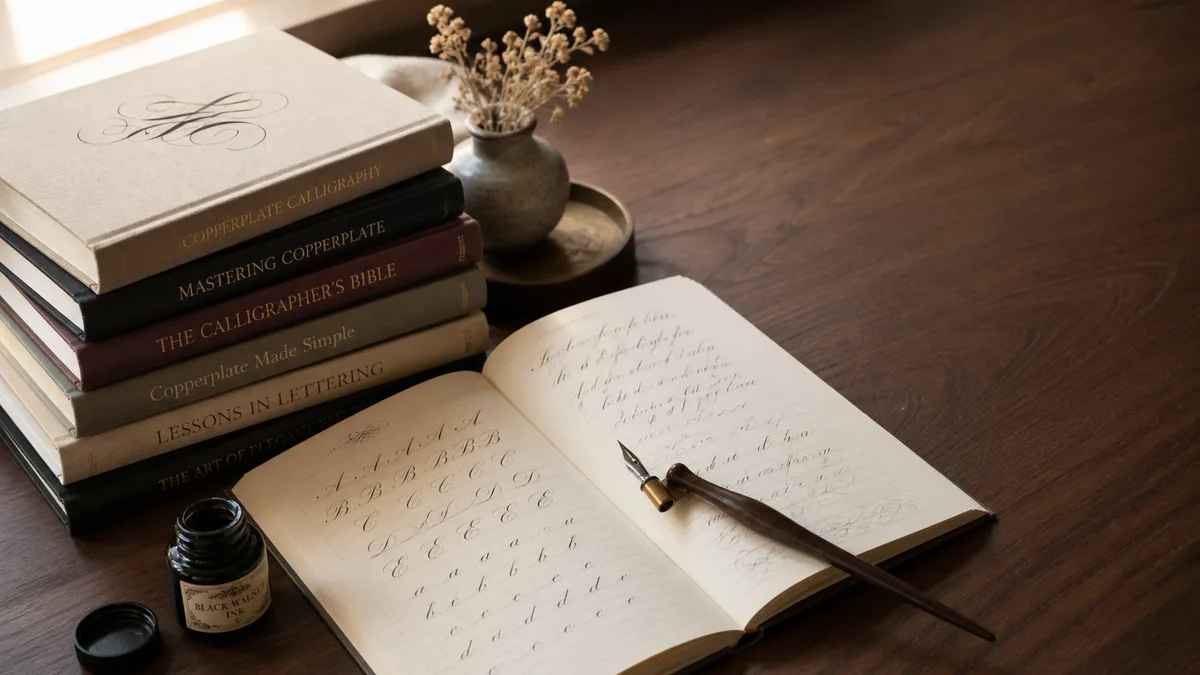
For a child interested in decorative letters, look at a sample of Eleanor Winters's Calligraphy for Kids. For an adult who wants a broad first introduction, consider Margaret Shepherd's Learn Calligraphy. Save a large alphabet reference for someone who already knows which tools they enjoy. A book with more alphabets is not automatically a better first lesson.
We chose these books for different readers: a child working with an adult, an adult trying calligraphy for the first time, and someone ready for a reference book or a specific script. We checked the titles, authors, and Amazon links on September 20, 2026. We have not tested the exercises or assessed age suitability, so preview the edition before buying for a child. For more reference books, see our general calligraphy book guide.
First decide: school handwriting or creative lettering?
A child who needs help with everyday joined handwriting needs a different resource from a child who wants to make decorated cards. A calligraphy book may ask the reader to manage pen angle, stroke contrast, layout, and unfamiliar letter shapes. It need not follow the alphabet taught at school. If you are buying for school practice, ask the teacher which model the class uses. A book for making cards can follow a different model without creating that conflict.
Our handwriting-method comparison explains curriculum differences. For the broader distinction, read cursive versus calligraphy and calligraphy versus hand lettering. If the learner mainly wants attractive letters without a specialist pen, start with faux calligraphy and postpone the purchase until you know the interest will last.
For a shared child-and-adult activity: Calligraphy for Kids
Calligraphy for Kids by Eleanor Winters is published by Union Square Kids and aimed at children. Start here when looking for a book to use together, then check whether the sample pages suit your learner. The title alone cannot tell you how much help they will need. This is a creative-lettering choice, not a replacement for the handwriting course used at school.
Inspect a sample or borrow a copy first. Can your learner follow the instructions with the help you can realistically provide? Can they see the example while their writing hand is on the page? Is there enough space to attempt a letter without squeezing it between tiny rules? Check the required materials in the edition you are buying. An adult should handle any tools that are sharp, messy, or unsuitable for the learner's independence level.
For the first session, make something small together, such as a name label or a short greeting. An entire alphabet can wait. Let the learner choose the word, then use the project idea tool when they want another reason to write. If they lose interest in the drill but still want to finish the card, keep the session focused on that project.
For the adult starting from scratch: Learn Calligraphy
Learn Calligraphy: The Complete Book of Lettering and Design by Margaret Shepherd is our pick for an adult who wants a general introduction to lettering and design before choosing a style. Check the contents and a sample lesson against what you want to make. If you only want modern brush lettering, a broader book may devote too much space to other tools and hands for your needs.
Pair the first reading with the style roadmap. Identify whether the example you like uses a broad-edge tool, a pointed nib, or a brush. Then compare the relevant setup in our pen guide. Buying a pointed-pen kit for a broad-edge lesson creates needless frustration. If the lesson uses a tool you do not own, make a short shopping list from that lesson instead of buying the largest assortment available.
For the curious learner who already practices: The Calligrapher's Bible
The Calligrapher's Bible by David Harris brings together 100 alphabets with step-by-step hand-lettering guides, according to the book's listing. It is a reference to consult when comparing styles or returning to an alphabet you have practiced before. For a hesitant beginner, all those choices can become a distraction: turning pages is easier than repeating one difficult stroke.
Buy it as a second book or a reference for a learner with a clear plan. Choose one alphabet and keep other styles out of the practice session until the basic forms become familiar. Our style overview helps name the options, while the glossary explains terms such as x-height and ductus. Skip it as an independent first workbook for a child who needs short, closely guided instructions.
For a specific next step: Mastering Copperplate Calligraphy
Mastering Copperplate Calligraphy by Eleanor Winters is for someone who has chosen Copperplate and wants to study it in detail. Check that the recipient wants pointed-pen work before giving it as a gift. Someone hoping to make brush-lettered cards may need a different book, however much they admire Copperplate on the cover.
Read our Copperplate introduction first, then check the manual's equipment list. Our nib guide and holder guide explain the equipment choices. Young learners need adult supervision with sharp dip nibs and open ink bottles; decide whether you can provide that before buying the book and supplies.
Inspect the edition, not just the title
Check the author, format, and ISBN or ASIN before ordering. A paperback, ebook, and workbook can be listed together even though they behave differently on a desk. Sample pages should show readable instructions and useful examples at the size you will actually use. If the book asks you to write inside it, check whether a used copy has already been filled in. A library copy is a sensible way to evaluate a reference book before committing shelf space or money.
Do not assume that buying a book grants permission to photocopy it for a class. Read the reproduction terms and obtain permission when needed. A teacher may need a classroom license or a reproducible resource. Keep downloaded practice materials under the same scrutiny: “free” can refer to personal use only. The licensing guide covers related distinctions for fonts and generated artwork.
Turn the book into a workable practice routine
Open to one exercise and name what you are checking: consistent height, an open oval, or an even space. Keep the model visible and compare a few attempts before repeating the whole row. Finish while the learner still wants to return. Our practice guide explains this approach, and the challenge calendar can help an adult maintain a routine without turning it into a speed test.
The practice-sheet tool is useful for decorative font tracing or spare writing space, but it does not reproduce the book's teaching model. Follow the author's exemplar for the actual lesson. Keep the first dated sample, then compare a later attempt at the same task. That tells you more about whether a book is useful than the number of pages completed.